Land Surveying for a Shared Private Driveway
A shared driveway can work fine for years until someone wants to repave it, sell a lot, or put up a gate. Then two questions come up fast: who owns which part, and who has the right to use it. Land surveying answers those questions with measured facts instead of memory or an old handshake deal. If you share a driveway with a neighbor, getting a survey before a project or sale can save you money, time, and stress.
Why Shared Driveways Create Surveying Questions
Most shared driveways sit on or near a property line. One owner may own the whole strip while the other has a right to cross it. In other cases, the line runs down the middle and each owner owns half. The setup often started decades ago, and the paperwork may be thin.
Trouble usually starts when something changes. A new owner moves in, a gravel lane gets paved and widened, or a fence goes up where someone thinks the line is. Each change raises the same issue, which is whether the driveway still matches the deeds and plats.
Driveways also drift over time. People pull onto the grass, add a turnaround, or widen a curve. A survey compares what’s on the ground with what’s on paper, and that comparison is where most answers come from.
Locating Property Lines Along a Shared Driveway
A boundary survey is the main tool for finding property lines along a shared driveway. The surveyor researches deeds, plats, and nearby survey records. The field crew then searches for monuments, which are iron rods, pipes, or other markers set at lot corners. The final drawing shows the lines and where the driveway sits in relation to them.
The survey often reveals one of these situations:
- The driveway sits fully on one lot, and the neighbor crosses it.
- The property line runs down the driveway and splits it between owners.
- Pavement, a curb, or a parking pad extends past the area covered by access rights.
- A fence, mailbox, or wall sits on the wrong side of the line.
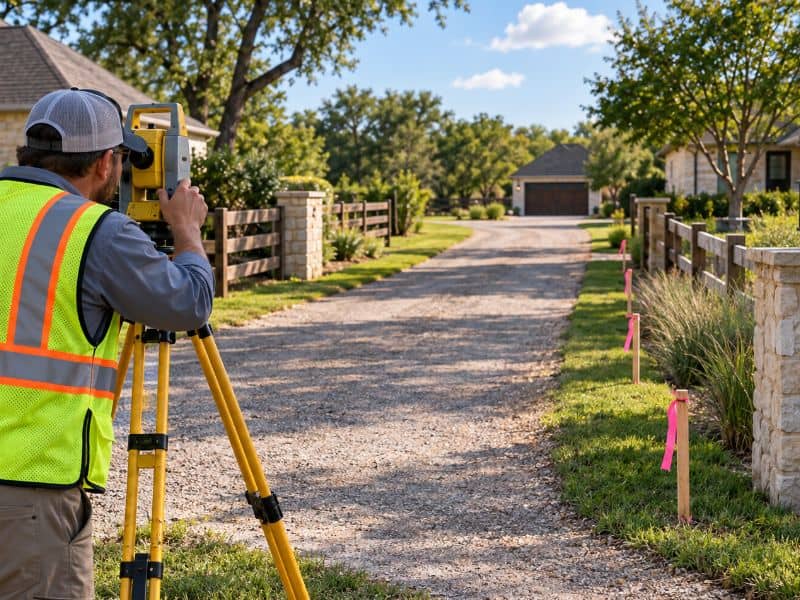
If you plan work near the line, ask the surveyor to mark it on the ground. Stakes or flags make the line easy for owners and contractors to see. That small step removes a lot of guesswork.
Identifying Access and Driveway Easements
An access easement is a recorded right that lets one owner use part of another owner’s land for a set purpose, such as reaching a home. Easements usually appear in deeds, plats, or separate recorded documents. Some shared driveways also have a written maintenance agreement that explains who pays for repairs and how costs are split.
A surveyor can show recorded easements on the drawing when the documents are found in research or provided by a title company. Many surveyors work from a title commitment, which lists recorded items that affect the property. Ask whether the easement’s width and location on paper match the actual driveway. Gaps between the two are common, especially on older lots.
Some driveway rights were never written down. A surveyor can’t decide unrecorded or claimed rights, since those are legal questions. The survey can still show physical evidence, such as a worn path or pavement crossing a line, and a real estate attorney can explain what that evidence means for you.
Surveying Before Driveway Improvements or Construction
Get a survey before you repave, widen, add drainage, or build near a shared driveway. Work done in the wrong spot can land on a neighbor’s property or block someone’s access. Fixing it later often costs far more than the survey would have.
Depending on the project, a surveyor may recommend more than a boundary survey:
- A topographic survey shows slopes and ground elevations for drainage and grading plans.
- Construction staking marks where new edges, curbs, or culverts should go.
- Utility locating, often done by a separate service, finds lines buried under the driveway.
Permit rules for driveway work can vary by city, county, and project scope. Some places require approval for new curb cuts, culverts, or work near a public road. Check with your local permitting office early, and order the survey first if the permit depends on it.
Using Survey Information for Property Due Diligence
Buyers should look closely at any home or lot with a shared driveway. A current survey shows where the driveway sits, which easements are recorded, and whether anything crosses a line. Lenders and title companies may ask for a survey, though their requirements vary.
Review the survey with the title commitment and any maintenance agreement. Confirm there’s a clear access route from the public road to the property. Check that the easement covers the whole driveway, and ask the seller about past disputes, repairs, or informal deals with the neighbor.
Sellers benefit too. A clean survey answers buyer questions before they turn into closing delays. It also gives both neighbors the same set of facts to work from.
Frequently Asked Questions
Do I need a survey if my shared driveway has never caused problems?
You may not need one today, but a quiet history doesn’t confirm where the lines are. Problems often show up during a sale, a repair, or a change in ownership. A survey gives you facts before that pressure arrives. It’s usually easier to sort things out when nobody is in a hurry.
What type of survey do I need for a shared driveway?
Most owners start with a boundary survey that shows property lines and recorded easements. If you’re planning grading or drainage work, a topographic survey may help. Construction staking is useful when a contractor needs exact marks in the field. Your surveyor can recommend the right scope after hearing your goals.
Can a surveyor settle a driveway dispute with my neighbor?
A surveyor can show where the lines and recorded easements fall, but can’t decide legal rights. The survey often clears up confusion on its own because both owners see the same facts. If the dispute involves unrecorded use or ownership claims, talk with a real estate attorney. The survey will still be a key piece of evidence in that conversation.
How long does a boundary survey take?
Timing depends on the property size, the records available, and the surveyor’s schedule. Simple lots with clear records move faster than older parcels with missing monuments. Research can take longer when deeds conflict or descriptions are vague. Ask for a timeline early if a closing or permit depends on it.
Will an old survey work for a shared driveway project?
An older survey can help, but it may not show recent changes like new pavement or fences. Lenders and title companies may also want a more current survey. A surveyor can review the old drawing and tell you whether an update makes sense. That review often costs less than starting from scratch.